Monday, 25 June 2012

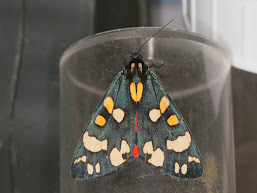
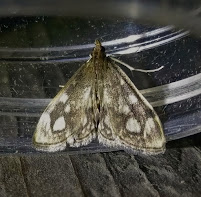
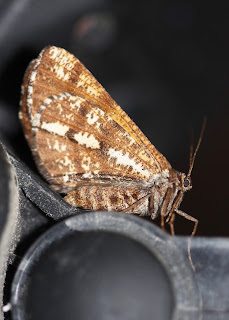
Just a bit of fun now: a moth identification quiz. You may have seen similar things elsewhere; a series of cropped images showing part of moth. Here I've featured 18 species for you to have a go at! Please remember the closing date is the 25th of June.

To see the images, as well as information on how to enter, please go here.


All newer posts will automatically be posted below

Tuesday, 22 May 2012

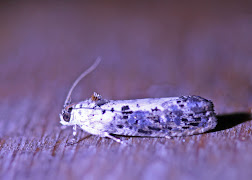
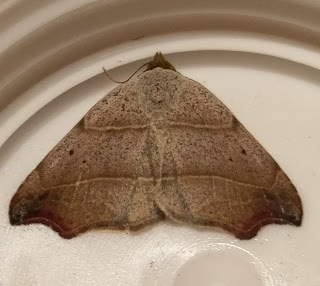
Further to the suggestion of using the blog for ID purposes, here's one to kick start things off. This micro was caught in the Robinson trap at Cors Dyfi on 18th May. I made the mistake of taking the photo from the side when one wing was partially covering the other therefore making ID difficult. If you have any suggestions please comment below. Thanks.Maria.

Friday, 18 May 2012

How about using the blog for identification?


It has recently been brought to my attention that the blog could be used as a tool for id purposes and I think the idea certainly has some merit.

As you regular moth-ers know, you can always send me photos of those species which are tricky to id, this is fine and the job always gets done, but have you ever thought about posting your photos for id onto the blog so that anyone can make a suggestion as to what species you’ve got. I think involving everybody would be very useful to all of you in sharpening those id skills plus it would give us all more interaction with each other. I would of course keep an eye on things and should any photo remain unnamed I of course will put my two penny worth in.

I appreciate of course where large amounts of photos for id are concerned, that this might not be the best way to go about things and in this case anyone can still contact me directly to get their photos id’d.

It would be great if we could give this idea a go, but of course if anyone wishes to still come directly to me with their id’s that will be fine too.

Peter.

Thursday, 17 May 2012

Day-flying Adela

To further the theme of day-flying moths, here my account on a few day-flying micros which are about at the moment. I'm talking about the Adela species, which are sometimes referred to as 'fairy longhorns' due to the ridiculously oversized antennae of the male. These are part of the large group of micros which are undoubtedly under-recorded as they are never seen at light traps. There are 5 species of Adela in the UK: A. reaumurella, rufimitrella, cuprella, fibulella and croesella. Care should probably taken with ID as some of the Nemophora species can be quite similar though.

Adela reaumurella is a very common species over most of the UK and is almost certainly overlooked here in Montgomeryshire. The adults can be seen flying around on sunny days; as larvae they feed on leaf litter. The males of species also sometimes swarm - often around oak trees, a sight I've yet to see!
Adela rufimitrella on cuckoo flower

Adela rufimitrella, is similar to the above species but can be separated by it's yellow crown, smaller size and brassy-coloured forewings. This species is fairly common across the UK and can be found flying near cuckoo flower or garlic mustard on sunny days. This species is also probably overlooked; I recently found the third county record, the first for 12 years, after less than a minute searching!

Adela cuprella is third of the genus which look fairly similar. This species has yet to be recorded in Montgomeryshire, probably due to its secretive lifestyle, spending most of the time at the tops of sallow trees.

The other two species are Adela fibulella and Adela croesella; the former has only been recorded in the county on a handful of occasions, so one to look out for. The latter has not been recorded here before. Both are quite distinctive.

Just a few more species to look out for when you're out and about!

Douglas.

Wednesday, 16 May 2012

Micropterix calthella


I'm sure that, until Peter posted his "day-flying species alert", I was not alone in thinking that the myriad of little insects often seen in buttercups were just some small fly or other.  However, upon close investigation, it becomes apparent that the majority of them are indeed these attractive little micro-moths Micropterix calthella.  They are quite sprightly little blighters, often jumping like fleas, so a degree of sedation was found to be necessary in order to capture these photos below; half an hour or so in the fridge followed by a minute or two in the freezer seemed to do the trick!


And indeed they are very beautiful when you see them close up, irridescent gold and silver, some with lovely purple patches; it depends on how the light catches as to the exact colouration seen.  All have tufted heads; some are orange and some are white, I assume male and female, but does anyone know which is which?


And at this time of year you are likely to see many of them "in flagrante dilecto"; you even get voyeurs in this micro-moth world!

At the start of this year the county database held just 9 records for Micropterix calthella; how many hundred records would you like added, Peter??

Peter

Sunday, 13 May 2012

Please check out those day flying species!

As the days get longer, and hopefully warmer, we can expect to see more day flying species of moths, but I wonder how many of you record these species, when you see them?

Most of you run a light trap of some sort or other and then send me all these records at the end of the year, which of course is great and I really appreciate you all taking the time to do this. However, when we’re out and about we often see day flying species or bump into some caterpillars and it would be great if you could make a note of when, where and what you’ve seen and add this information to your records. I always carry a small notebook and pot or two around with me, as you never know when you are going to find something you can’t id. Pot it up, pop it in your pocket and id it later, it might be something really special!

At the moment you should be able to find the tiny Micropterix calthella, a micro moth which can be found on buttercup flowers on any sunny day and in the next month, or so, the Burnet moths will be seen buzzing around the flower heads of thistles or knapweeds where ever they grow. If you are very lucky you might see a Humming-bird Hawk-moth feeding at the flowers of buddleia or other nectar rich flowers. In fact throughout the summer months many other day flying species can be seen, just a shake of a bush or tap the branch of a tree, this will often reveal a resting species. A walk through any vegetation is liable to ‘put up’ a moth or two; a mere movement along any footpath is also likely to flush something out. Keep an eye open for nibbled leaves, a quick investigation under the leaves or along the stem could well yield the culprit and it’s very likely to be a caterpillar.

So the moral of the story is, you never know what you’ll find or when you’ll see it, but as the boy scouts amongst you will know, (sorry girls!), one of their sayings is, ‘be prepared’, so please make a note of these field records and send them into me with your other records at the end of the year.

Peter.

Saturday, 12 May 2012

Even lean times have their benefits!


I know that the traps have not exactly been overflowing with moths these past few weeks; nevertheless last night I decided to play the odds and put my trap on at my caravan at Morben Isaf in the extreme west of the county.

The omens weren't good since it was going to be a cold clear night; the temperature was below 9 degrees when I lit up at 9.30pm, and fell to less than 3 degrees overnight.

When I got up to check the trap at 5am, I didn't think at first sight that my optimism had been rewarded, recording the grand total of THREE moths (one better than Peter W at Commins Coch!).

But I potted the trap contents for later perusal, and then found that I had got a Lesser Swallow Prominent and a Great Prominent, but the "pièce de résistance" was this Brindled Beauty, which I think is the first record for this part of Montgomeryshire.


It just shows that you never can predict what may turn up in your trap!

Peter